Microservices architecture has become the backbone of modern, scalable software systems. When combined with the power and maturity of .NET, it provides a robust platform for building cloud-native, enterprise-grade applications.
In this article, you’ll learn what microservices are, why they matter, and how to implement them effectively using .NET, with real-world design considerations.
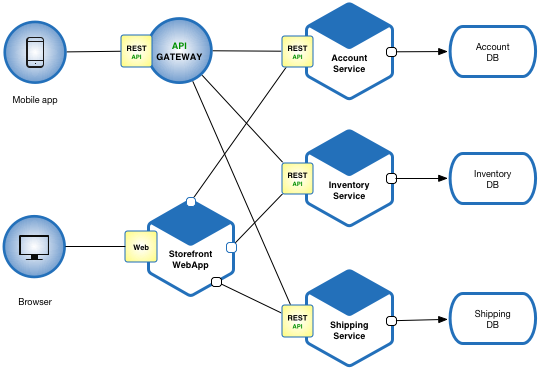
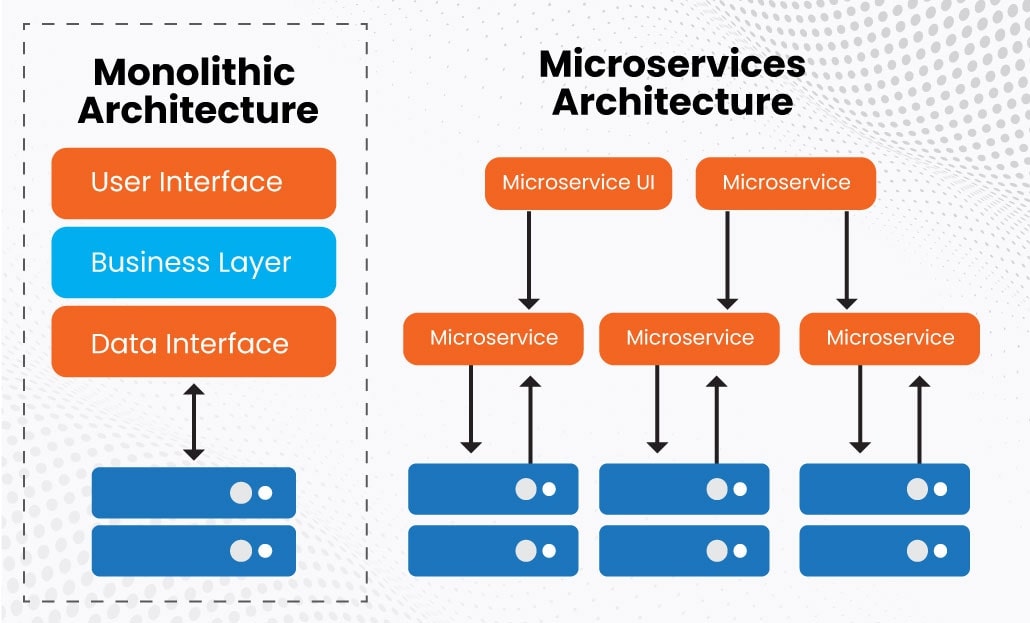
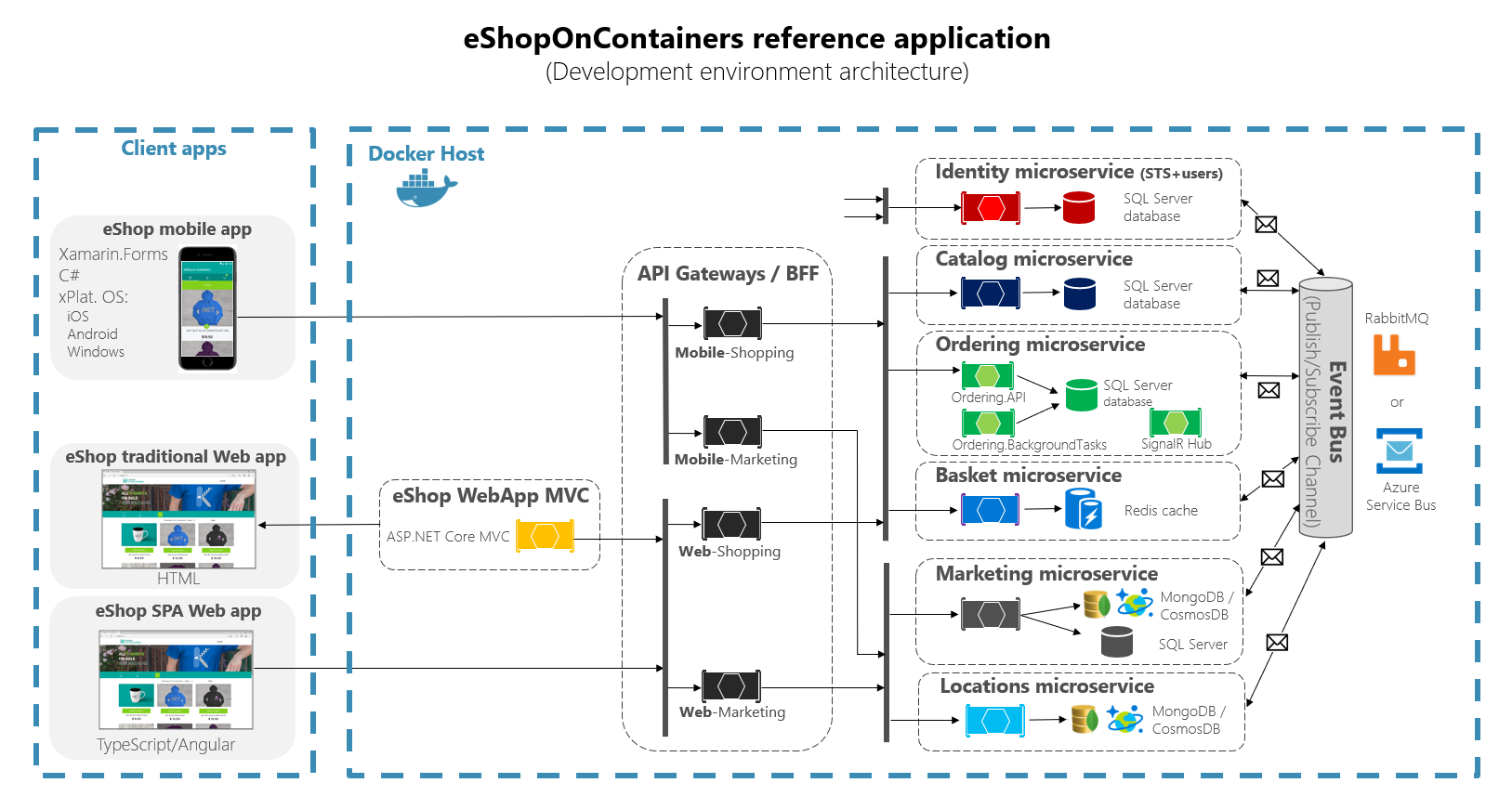
The diagrams below visually explain how microservices architecture is structured and how it differs from traditional monolithic systems. They illustrate service separation, independent deployment units, inter-service communication, and container-based deployment using Docker and Kubernetes. These visuals provide a high-level view of how .NET microservices are organized in real-world systems and how each service operates independently while still working together as a single application.
What Is Microservices Architecture?
Microservices architecture is an approach where an application is broken into small, independent services, each responsible for a specific business capability.
Each microservice:
- Runs as an independent process
- Has its own database
- Can be developed, deployed, and scaled independently
- Communicates with other services via APIs or messaging
This is very different from a monolithic architecture, where all components are tightly coupled and deployed together.
Why Choose Microservices?
Key Benefits
- Independent deployments – Release features faster
- Better scalability – Scale only what you need
- Technology flexibility – Different services can use different tools
- Fault isolation – One service failure won’t crash the entire system
- Improved team autonomy – Teams own specific services
When Microservices Make Sense
Microservices are ideal when:
- You have a large or growing application
- Multiple teams work in parallel
- You need high availability and scalability
- You plan to deploy on the cloud
⚠️ For small applications, microservices may introduce unnecessary complexity.
Why Use .NET for Microservices?
Microsoft has positioned .NET as a first-class platform for cloud-native development.
Advantages of .NET in Microservices
- High performance with ASP.NET Core
- Cross-platform (Linux, Windows, macOS)
- Excellent cloud support (Azure, AWS, GCP)
- Rich ecosystem for APIs, security, messaging, and data
- Long-term support (LTS) releases
Core Components of .NET Microservices Architecture
1. API Layer (ASP.NET Core)
Each microservice is typically built using ASP.NET Core Web API.
Responsibilities:
- Handle HTTP requests
- Validate input
- Return responses (JSON)
- Expose REST or gRPC endpoints
Example:
[ApiController]
[Route("api/orders")]
public class OrdersController : ControllerBase
{
    [HttpGet("{id}")]
    public IActionResult GetOrder(int id)
    {
        return Ok(new { OrderId = id, Status = "Completed" });
    }
}
2. Independent Databases
Each microservice owns its data.
Common choices:
- SQL Server
- PostgreSQL
- MongoDB
- Redis
This avoids tight coupling and enables independent scaling and schema changes.
3. Communication Between Microservices
Synchronous Communication
- REST APIs
- gRPC (high performance)
Use when:
- Immediate response is required
Asynchronous Communication
- Message queues
- Event streaming
Popular tools:
- RabbitMQ
- Azure Service Bus
- Apache Kafka
This improves resilience and decoupling.
4. Service Discovery & API Gateway
API Gateway
Acts as a single entry point:
- Authentication & authorization
- Rate limiting
- Request routing
- Aggregation of responses
Common choices:
- Ocelot (for .NET)
- Azure API Management
- Kong
5. Containerization with Docker
Docker is widely used to package .NET microservices.
Benefits:
- Consistent environments
- Easy deployment
- Lightweight isolation
Typical flow:
.NET App → Docker Image → Container
6. Orchestration with Kubernetes
Kubernetes manages:
- Scaling
- Load balancing
- Self-healing
- Rolling updates
Each microservice runs as a pod, allowing independent scaling.
Security in .NET Microservices
Security must be distributed, not centralized.
Common practices:
- OAuth 2.0 / OpenID Connect
- JWT tokens
- HTTPS everywhere
- Zero-trust communication
Identity providers:
- Azure Active Directory
- Auth0
- IdentityServer
Observability: Logging, Monitoring & Tracing
Microservices require strong observability.
Essential Tools
- Centralized logging (Serilog, ELK)
- Metrics (Prometheus, Azure Monitor)
- Distributed tracing (OpenTelemetry)
Without observability, debugging microservices becomes extremely difficult.
Common Challenges (and How to Handle Them)
| Challenge | Solution |
|---|---|
| Increased complexity | Clear service boundaries |
| Network failures | Retry, circuit breaker (Polly) |
| Data consistency | Eventual consistency |
| Debugging | Centralized logging & tracing |
| Deployment overhead | CI/CD pipelines |
Best Practices for .NET Microservices
✅ Design services around business capabilities
✅ Keep services small and focused
✅ Use asynchronous communication where possible
✅ Automate deployments with CI/CD
✅ Version APIs properly
✅ Embrace event-driven architecture
❌ Avoid shared databases
❌ Avoid chatty service calls
Real-World Use Cases
- E-commerce platforms
- FinTech applications
- Streaming services
- SaaS products
- Large enterprise systems
Some large systems use microservices to isolate business capabilities and scale components independently, but system size alone does not determine whether microservices are appropriate. The architecture should match the team’s operational needs and domain boundaries.
Conclusion
Microservices architecture with .NET offers a powerful, scalable, and enterprise-ready approach to building modern applications. While it introduces complexity, the benefits in scalability, resilience, and development velocity often outweigh the challenges—when implemented correctly.
If you’re building cloud-native, scalable applications, .NET microservices are a strong and future-proof choice.
Code is for execution, not just conversation. I focus on building software that is as efficient as it is logical. At Ganforcode, I deconstruct complex stacks into clean, scalable solutions for developers who care about stability. While others ship bugs, I document the path to 100% uptime and zero-error logic