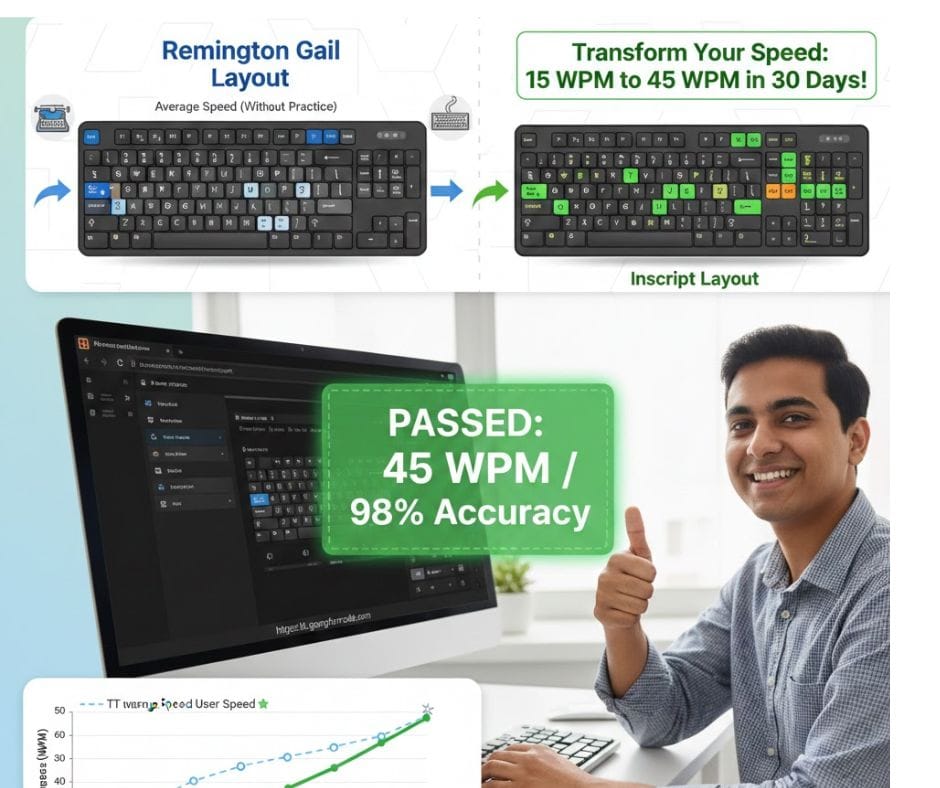
The written exam is only half the battle. Every year, thousands of brilliant candidates clear the cut-off for SSC, Railways, and State Govt jobs, only to be disqualified during the Hindi Typing Skill Test.
In fact, nearly 90% of failures in the final stage happen because of three simple mistakes: wrong font choice, lack of exam-simulated practice, and keyboard layout confusion. If you are serious about a government career in 2025, you cannot afford to wing it. Here is how you can stay in the winning 10%.
The “Mangal Font” Trap
Most students practice on Kruti Dev at home, only to realize on exam day that the department requires Mangal Font (Inscript or Remington Gail). This shift is the #1 reason for failure.
In 2026, the standard is clear: If you aren’t practicing in a Mangal-based environment, you aren’t practicing for the real exam.
How This Free Tool Changes the Game
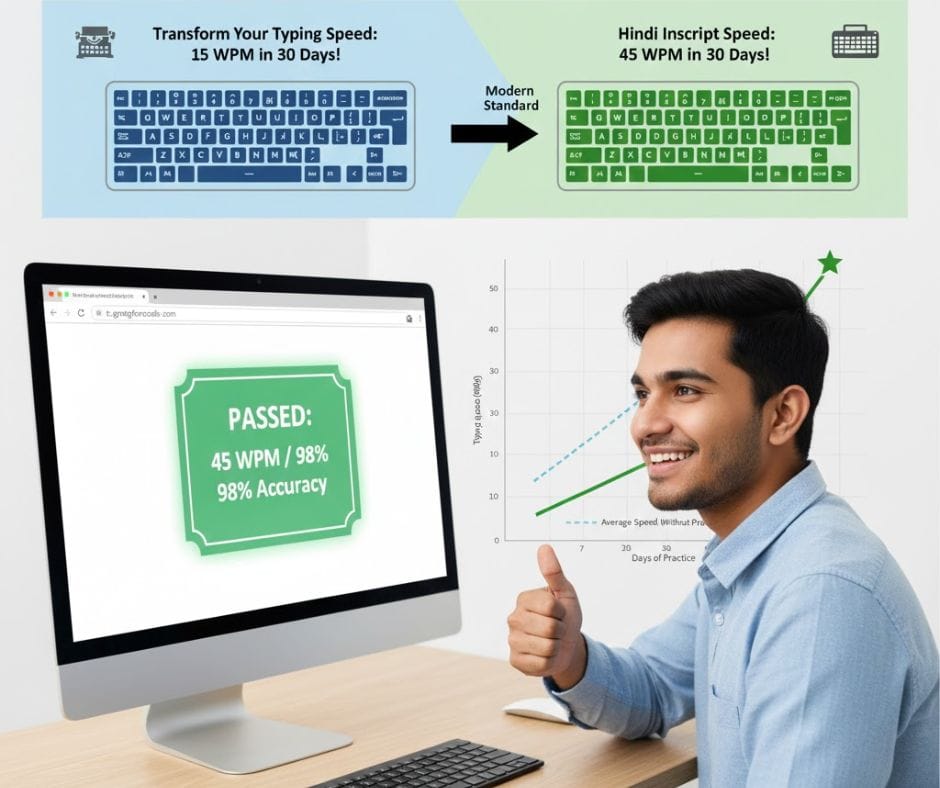
You don’t need expensive coaching or paid software to master typing. tt.gangforcode.com was designed specifically to solve the problems that cause students to fail.
1. It Mimics the Actual Exam Software
Our Hindi typing test online interface is designed for focused, timed practice with scrolling text and character highlighting so you can build consistency before taking a real skill test.
2. Real-Time Error Analytics
You can’t fix what you can’t measure. The tool provides a breakdown of:
- Net Speed (WPM): Your actual speed after penalty.
- Accuracy Percentage: The “make or break” metric for qualifying.
- Key Errors: It identifies which Matras or characters are slowing you down.
3. Interactive Keyboard Charts
Whether you use Remington Gail or Inscript, our built-in Hindi typing keyboard chart acts as a visual guide. Instead of looking down at your hands, the on-screen chart builds the muscle memory you need for high-speed typing.
The 7-Day “Pass” Strategy
If your exam is approaching, follow this routine:
- Identify Your Layout: Check your notification (usually Mangal Remington Gail).
- The 20-Minute Sprint: Practice on tt.gangforcode.com for 20 minutes every morning.
- Focus on Accuracy, Not Speed: Aim for 95% accuracy first. Speed will naturally follow.
- Use the Cheat Sheet: Print our keyboard chart and keep it near your desk for quick reference.
How to Measure Hindi Typing Improvement
A useful typing-practice routine should track more than raw speed. Record your speed, accuracy, error count, and the type of mistakes you repeatedly make. A session that is slightly slower but much more accurate can be a better training result than a fast session full of errors.
| Metric | What It Tells You | How to Use It |
|---|---|---|
| Speed | How quickly you type | Track the trend over several sessions |
| Accuracy | How often you type the expected characters correctly | Work on recurring errors before chasing higher speed |
| Error pattern | Which keys, matras, or combinations cause mistakes | Practice those combinations separately |
| Consistency | Whether performance remains stable under timed practice | Repeat tests under similar conditions |
A Practical Practice Routine
- Confirm the keyboard layout and font required by your specific recruitment notice.
- Spend a few minutes practicing difficult character combinations before starting a timed test.
- Complete a timed session without looking at the keyboard unnecessarily.
- Review errors and identify two or three patterns that need improvement.
- Repeat the same type of exercise later and compare accuracy before speed.
Avoid Practicing the Wrong Skill
A common mistake is to practice only free typing or English keyboard exercises when the real assessment requires Hindi input with a specific layout. Use the same language, layout, time pressure, and keyboard configuration specified for your test whenever possible. Always treat the official examination notice as the source of truth for eligibility and test requirements.